5500W Tankless Electric Water Heater: Best Uses & Setup
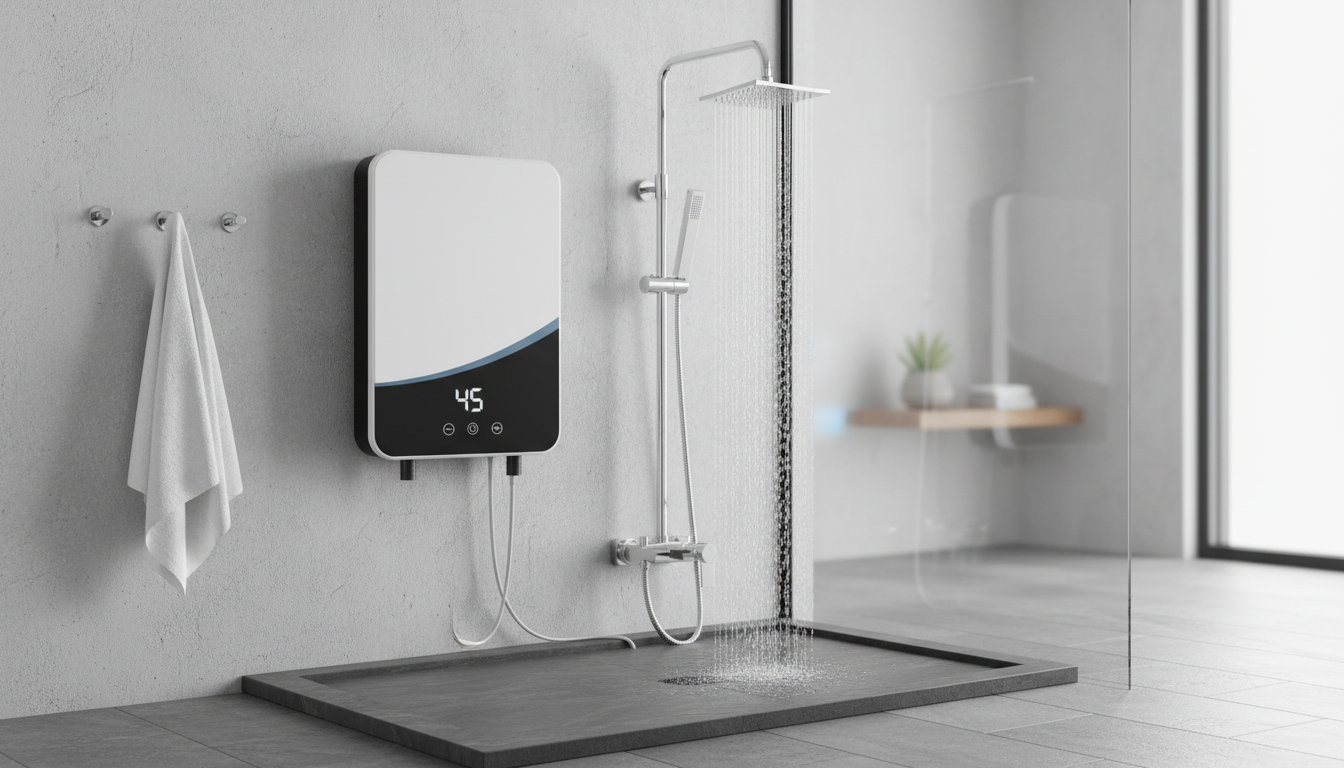
Tankless Electric Hot Water Heater 5500W: What It’s Best For and How to Set It Up
A 5500W tankless electric water heater is a compact, on-demand option designed to deliver hot water without a storage tank. It’s often used as a point-of-use heater for a sink, workshop, RV hookups, or a single fixture where quick warm water and space savings matter most. The key to satisfaction is matching the heater’s power to the temperature rise and flow rate needed at the fixture, then installing it with proper electrical capacity and safety protections. For more guidance, see Electric Tankless Water Heating: Competitive Assessment.
What a 5500W tankless electric heater can (and can’t) do
A 5500W electric tankless unit is typically a “one job, one location” solution. It shines when it’s mounted close to the fixture and asked to deliver steady warm water at a modest flow. For further reading, see Tankless water heating.
- Designed for on-demand heating at one location rather than whole-home multi-shower use.
- Performance depends on incoming water temperature: colder supply water reduces achievable flow at a comfortable temperature.
- Best fit: handwashing sinks, bar/prep sinks, garages, cabins, or boosting hot water near a distant fixture to reduce wait time.
- Not ideal for high-demand fixtures (multiple showers, large tubs) unless the model is specifically sized for whole-home output and the electrical service supports it.
One simple way to set expectations: the colder the incoming water and the higher the flow, the harder the heater has to work. If it can’t keep up, you’ll either get cooler water at the same flow or you’ll need to reduce flow to maintain temperature.
Key specs to check before buying
Before choosing a 5500W unit, confirm the practical details that determine whether it will feel “instant and comfortable” or “underpowered and fussy.”
- Power and voltage requirements: confirm the unit’s voltage (commonly 240V for 5500W models) and that the panel has capacity.
- Amperage draw: ensure the circuit breaker size and wire gauge match manufacturer requirements and local code.
- Temperature rise needs: estimate incoming water temperature and the desired outlet temperature at the fixture.
- Flow rate at target temperature: verify expected gallons per minute (GPM) for realistic use (handwashing vs. showering).
- Installation location: confirm clearance, mounting surface, and proximity to the fixture for minimal heat loss and shorter wait times.
- Water quality: hard water can scale heating elements; consider filtration or descaling access if water is mineral-heavy.
For background on how demand-type heaters operate and where they make sense, the U.S. Department of Energy provides a helpful overview: Tankless or Demand-Type Water Heaters.
Sizing guide: match power to flow and temperature rise
Point-of-use sizing gets easier when you plan around a single fixture and a single “worst case” season (usually winter). Start with two numbers: incoming water temperature and desired outlet temperature. The difference is your temperature rise.
- Start with two numbers: incoming water temperature and desired outlet temperature; the difference is the temperature rise.
- Higher flow requires more power; if the heater is undersized, it will reduce temperature or may restrict flow to keep up.
- Point-of-use sizing usually targets lower flow (sink use) rather than full-shower flow.
- If hot water is needed for more than one fixture at once, consider multiple point-of-use units or a larger whole-home system if electrical service allows.
| Item to estimate | Why it matters | What to do |
|---|---|---|
| Incoming water temperature | Colder water needs more heating power | Check seasonal cold-water temp; assume colder months for sizing |
| Desired outlet temperature | Sets comfort level and mixing needs | Common target is warm-to-hot at the tap; verify local scald-prevention guidance |
| Fixture type and flow | Determines demand on the heater | Look up faucet aerator flow (e.g., 0.5–2.2 GPM) and typical usage |
| Electrical capacity | Determines what can be safely installed | Confirm voltage, breaker space, and wire gauge with a qualified electrician |
| Water hardness | Scaling reduces performance over time | Plan for filtration/softening or periodic descaling access |
Installation essentials and safety checks
A compact point-of-use installation is often straightforward, but the electrical side must be treated seriously. Follow the manufacturer’s manual and local code, and use a licensed electrician when new circuits or panel work is involved.
For code context and safe electrical practices, consult NEC resources from NFPA: National Electrical Code (NEC) information.
Operating costs, efficiency, and maintenance
Product spotlight: Tankless Electric Hot Water Heater 5500W
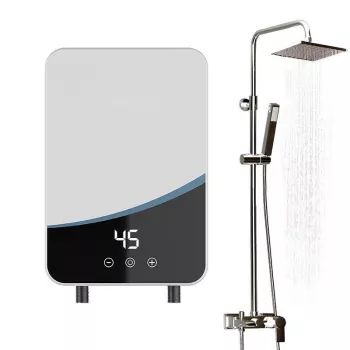
The Tankless Electric Hot Water Heater 5500W is a space-saving option for point-of-use hot water where a full-size tank is inconvenient or where long pipe runs make hot water feel slow to arrive.
Electric vs. natural gas tankless: when each makes sense
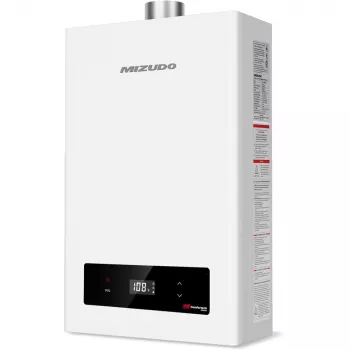
For households aiming at higher simultaneous demand, consider a whole-home-capable option such as a Natural Gas Tankless Water Heater, especially when gas service and proper venting are already feasible.
FAQ
Is a 5500W tankless electric water heater enough for a shower?
Sometimes, but it depends on incoming water temperature and the shower’s flow rate. In warmer climates or with a low-flow showerhead, it may be workable; in colder months or with higher flow, the outlet temperature can drop and feel inconsistent.
Does a tankless electric heater need a dedicated breaker?
Many do, and a 5500W model commonly requires a dedicated circuit sized to the manufacturer’s specifications. Match voltage, amperage, breaker size, and wire gauge to the installation manual and local electrical code, and use a qualified electrician for new circuits.
How often should a tankless electric water heater be descaled?
It depends on water hardness and usage. In hard-water areas, descaling may be needed more often to prevent mineral buildup; follow the manufacturer’s schedule and consider filtration or softening if scaling is persistent.







Leave a comment